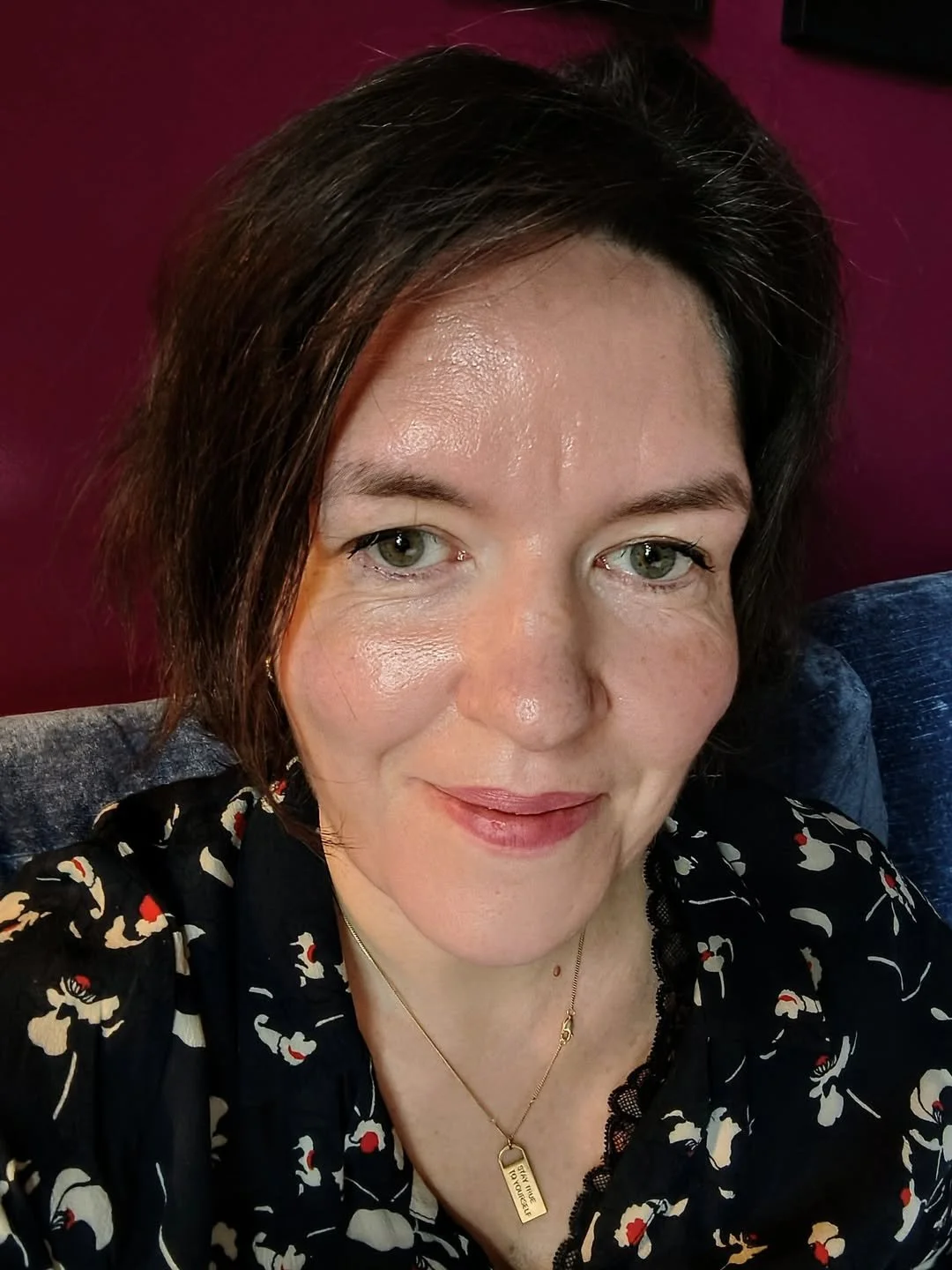
Short Bio:
Elinor Rowlands MA FRSA is an interdisciplinary artist, sound artist, filmmaker and art psychotherapist whose practice explores neurodivergence, crip and queer world-making, sensory experience and more-than-human ecologies. Working across sound, moving image, immersive arts and installation, they create dreamy world-building and phantasmagorical landscapes where melancholy, multiplicity and transformation open up alternative ways of sensing, relating and imagining other worlds.
Longer Bio:
Elinor Rowlands MA FRSA is an interdisciplinary artist, sound artist, filmmaker, art psychotherapist, crip doula, Autism/ADHD coach, Specialist Mentor (Mental Health and Autism), and practice-based PhD researcher working at the intersections of art, disability, neurodivergence, access, embodiment and crip/queer world-making.
Moving between artistic practice, research, facilitation, training and community organising, their work explores alternative ways of sensing, relating, learning and being together. She approaches access and care not as accommodations to existing structures, but as generative practices through which different worlds, temporalities and forms of knowledge can emerge.
Working across moving image, expanded cinema, sound, photography, painting, sculpture, collage, performance, movement, immersive arts, and installation, Elinor explores autistic perception, crip and queer temporalities, dark ecologies and more-than-human relations. Their practice attends to touch, intimacy, vulnerability, repetition, rhythm and sensory excess, challenging normative visual, cognitive and temporal frameworks. Their current research investigates autistic stimming within interiority as a method of thinking, sensing and making, exploring how repetition, texture, rhythm and sensory association generate alternative aesthetic and epistemological possibilities.
Elinor has a longstanding commitment to creating spaces and platforms led by marginalised communities. She founded the UK's first neurodivergent-led space specifically for autistic and ADHD women, trans folk and other marginalised identities via their arts project, Magical Women. In 2019, they published a book featuring contributions from 49 women artists and artists from marginalised identities, stocked by the Live Art Development Agency's bookshop in London, UK.
Elinor’s work has appeared in independent publications, anthologies and peer-reviewed academic journals spanning dance, music, performance and visual art. They were also included on an album released by NMC Recordings, described as the first dedicated to disabled composers and musicians.
In China, Elinor ran a voluntary, non-profit collective that renovated an orphanage and supported the mibility of bedbound and disabled children, and they helped establish free, accessible education for a Deaf school with her Chinese university students. The school was subsequently taken over by the government, with Deaf pupils housed in an accessible building. The initiative received regular coverage in Quzhou Daily and Zhejiang Daily.
As an art psychotherapist and crip doula, Elinor brings a relational, embodied and care-led approach to supporting people through change and transformation. Elinor's leadership, training and facilitation explore how crip and queer perspectives can reshape spaces, institutions and collective practices around access, interdependence and alternative rhythms of participation.
Elinor has presented internationally, including in Canada, Iceland, Poland, Amsterdam, Portugal, Luxembourg and across the UK. They recently convened a symposium exploring multilayering as method, embodied practices, care and access. Across their work, they approach access as a creative and political methodology, exploring how crip and queer ways of sensing, relating and inhabiting time might enable more liveable, interconnected and imaginative worlds.
Elinor’s work is also informed by experiences of displacement, cultural difference and the complexities of inhabiting multiple worlds, including their community work in China from 2005-2010. Across their practice, melancholy, dissociation and states of liminality are approached not simply as symptoms or pathologies, but as potential methods of perception, transformation and world-making.
Wetness, tears, menstruation, intrusive thoughts, memory, heritage, breath, peat bogs and more-than-human ecologies recur as material, sensory and conceptual presences, opening questions around permeability, decomposition, transformation and the unstable boundaries between bodies and environments.
Through wetness, Elinor explores connections between transness, the concept of feeling too much, "cry baby", feeling like a ghost, haunting, fluidity and becoming, unsettling fixed categories of identity, embodiment and belonging.
Multiplicity, duality, doubling, multilayering and density operate as both conceptual frameworks and material processes, allowing contradictory states, fragmented experiences and overlapping realities to coexist without requiring resolution.
Breath becomes a point of encounter between interiority and exteriority, presence and absence, intimacy and dissolution. Through these entanglements, Elinor explores how melancholy, estrangement, sensory difference and altered states of attention might generate alternative forms of knowledge, intimacy and relation, opening spaces for experiences that exceed singular identities, linear narratives and normative understandings of embodiment.
Artist
Art Psychotherapist
Access Consultant
Neurodiversity Trainer
Mentor
I am a multidisciplinary transart artist, art psychotherapist, researcher and access consultant working across art, disability, neurodivergence and inclusive creative practice.
My access work has grown alongside my artistic practice, research and professional experience supporting disabled and neurodivergent people. I am interested in access not simply as a set of adjustments, but as a way of changing how we think about creativity, communication, participation and the ways people are able to exist within artistic and cultural spaces.
I work with artists, arts organisations, creative teams, researchers and individuals to develop more accessible and neurodivergent-inclusive ways of working.
Neurodiversity & Disability Training
I offer training for arts organisations and creative teams around neurodivergence, autism, ADHD, disability and access.
My disability training videos have been used by arts organisations including Oily Cart, Sound and Music, and Daryl & Co., supporting organisations working to remove access barriers across theatre, music and the wider arts.
My training draws on lived experience, professional practice and research. I explore topics including:
Autism, ADHD, neurodivergence,
Disability and access,
Working inclusively with disabled and neurodivergent people, Neurodivergent artists and creative practice,
Accessible ways of working within arts organisations,
Sensory experience and Communication differences,
Disability arts and crip approaches,
Rethinking productivity, time and participation.
I aim to create training that moves beyond a deficit-based understanding of disability and neurodivergence, towards recognising different ways of sensing, communicating, thinking, creating and being.
I am a qualified SEND teacher (ages 4-21) and primary teacher (QTS) and trained in child development, but I do not work as a teacher. I complete between 250 hours + of CPD/training per year in relation to my coaching, mentoring and art psychotherapy work.
Access Consultancy
I provide access consultancy for artists, creative projects, arts organisations and research teams.
This can include thinking through access requirements, developing accessible ways of working, supporting neurodivergent artists, considering sensory and communication access, and embedding access throughout the creative process.
I am particularly interested in creative access — exploring how access can become part of the artistic process rather than something added at the end.
Access can sometimes open up new creative possibilities: different ways of communicating, experiencing, making, participating and relating to an artwork.
I have worked with:
Daryl and Co Theatre Company
Oily Cart Theatre
Chichester Festival Theatre
Magical Women
I am the founder of Magical Women, an autistic/ADHD-led project for women and non-binary artists.
Magical Women creates space for neurodivergent artists to connect, share creative practice and explore experiences that are often overlooked within mainstream arts and professional spaces.
The project has included exhibitions, publications, creative workshops and collaborative arts practice.
Mentoring Neurodivergent Artists
Alongside my artistic and therapeutic work, I mentor neurodivergent artists.
I support artists to develop their creative practice, navigate professional and institutional spaces, and find ways of working that are sustainable and meaningful for them.
My approach is informed by disability arts, neurodivergent perspectives and my own practice-based research. I am particularly interested in supporting artists to recognise their own ways of working and knowing, rather than feeling that they need to conform to conventional expectations of productivity, communication or professional practice.
Art Psychotherapy & Neurodivergence
I am also a qualified and registered art psychotherapist, working primarily with neurodivergent clients.
I work with autistic and ADHD clients, as well as people who are beginning to explore their own neurodivergence following the diagnosis of a child or family member.
My therapeutic practice recognises that experiences of neurodivergence are not always easily expressed through language. Art can offer another way of exploring sensation, identity, memory, relationships and experiences that may be difficult to articulate.
I am also developing autistic-led art therapy groups in response to the lack of accessible and affordable therapeutic provision available to many neurodivergent people, particularly those who are on low incomes.
Research & Practice
My access work is closely connected to my artistic research.
My PhD in Fine Art explored stimming as an artistic methodology, asking how embodied, sensory and neurodivergent ways of working might generate different forms of artistic knowledge.
Across my practice, I explore embodiment, disability, neurodivergence, crip time, gender, transness, sensory experience, communication and different ways of knowing.
This research informs the way I approach access: not simply as a question of making existing structures accessible, but also as an opportunity to question the structures themselves.
My Approach
I believe access should begin with listening.
There is no single model of what an accessible creative space looks like, because people have different bodies, minds, communication styles, sensory experiences and ways of participating.
My approach is therefore collaborative, flexible and grounded in the particular people, projects and environments involved.
Access is not something added at the end. It can shape the way we make, communicate, collaborate and imagine from the beginning.
Work with me
I offer:
Access consultancy
Neurodiversity & disability training
Workshops and talks
Mentoring for neurodivergent artists
Creative access support
Inclusive practice and research consultancy
Art psychotherapy
If you'd like to discuss a project, training session, consultancy or collaboration, please get in touch.
elinorrowlands [at]hotmail.com
info[at]elinorrowlands.com
@elinorrowlandsart
@elinorrowlands_art
