Practice and Conference Activity - Summer 2026
Over the summer, I undertook a period of field-based practice and conference in Iceland, followed by two conference/festival engagements that have directly informed my thinking on care, haunting and ecological entanglement within the PhD thesis and towards new work I’m circling.
Into the Deep Dark Woods, Embodied Reflection, (November, 2026)
I'm becoming less interested in the idea of resilience. I'm increasingly drawn towards interdependence, permeability and the possibilities of softer forms of survival. Resilience seems to ask us to withstand, to endure, to recover, to return to some imagined state of wholeness. It often carries an expectation that we should be able to absorb whatever happens to us without becoming too affected by it. I'm interested in what happens when we relinquish that expectation.
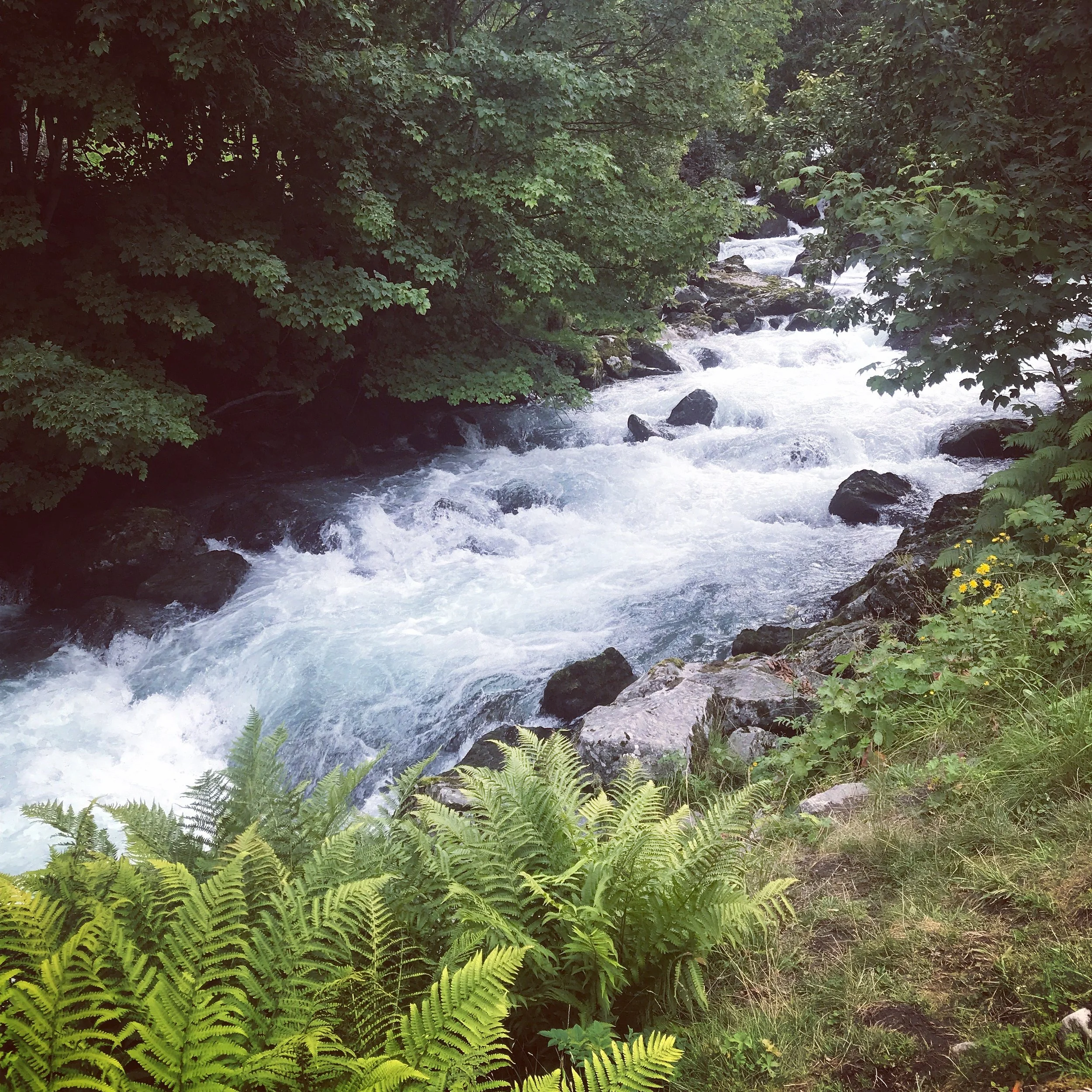
I've been thinking about moss. Its relationship with water, its responsiveness to humidity, its capacity to absorb moisture through its surfaces. Moss doesn't seem to survive through hardening or establishing itself as an autonomous, self-sufficient organism. It grows through contact, accumulation and proximity, inhabiting the surfaces of other things. It gathers in the crevices of tree bark, spreads across stone, colonises decaying matter and creates small worlds within larger ones. Its existence is relational.
I'm interested in the possibility of understanding sensitivity differently through these ecological relations. Rather than treating sensitivity as fragility, deficiency or an inability to withstand the world, perhaps it can be understood as a form of attunement: an embodied responsiveness to environmental conditions, atmospheres and other lives. Moss is affected by its surroundings. It absorbs, dries, becomes dormant, rehydrates and changes. Its survival is not dependent upon remaining unaffected.
I think about tree bark, too, and its relationship with moss, lichen, water and microorganisms. What appears to be a protective exterior becomes a habitat, a shared surface, a place of multiple inhabitation. The boundary between the tree and its environment is not as distinct as it might initially appear. Its bark becomes a site of accumulation, attachment and exchange.
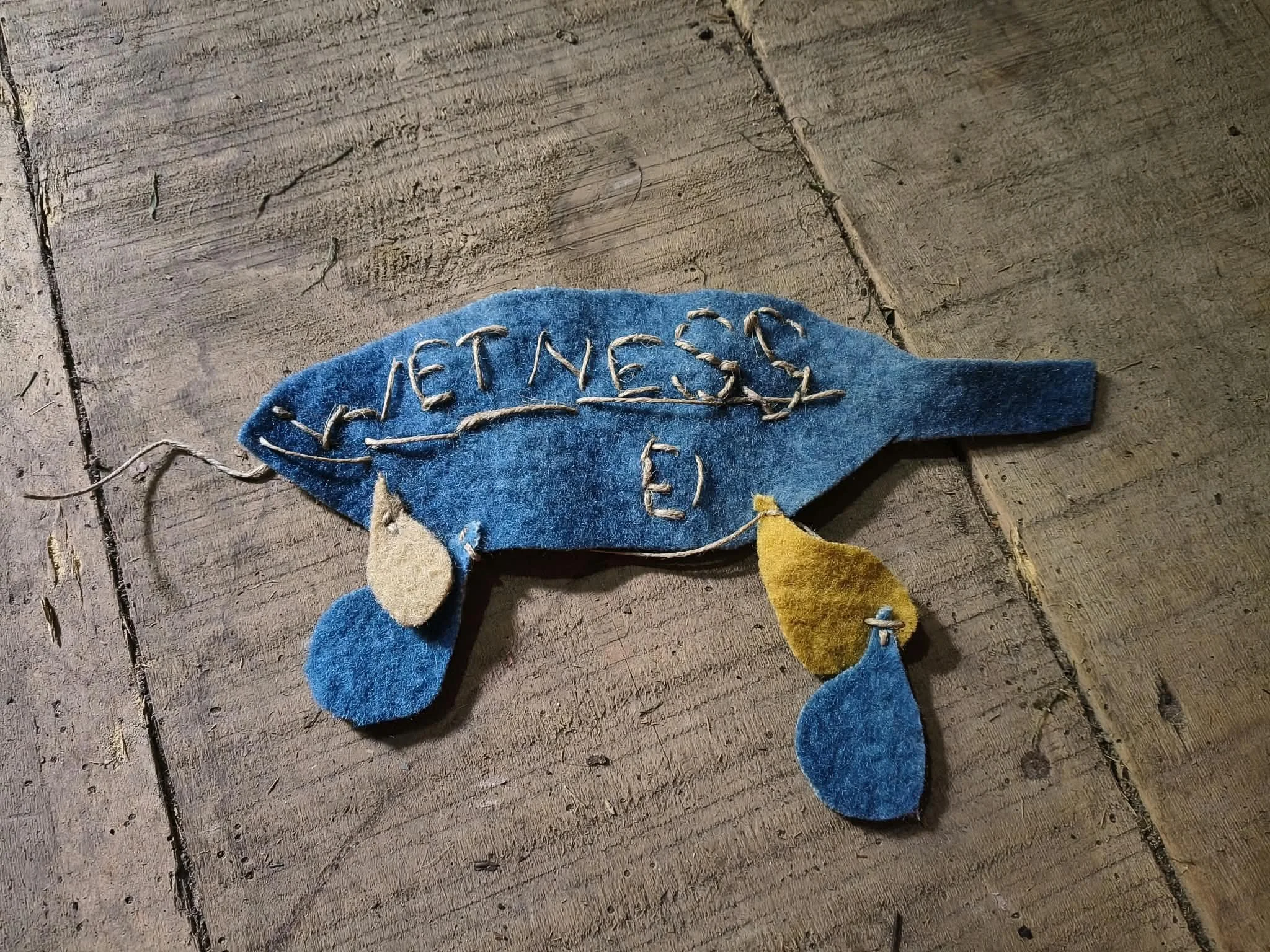
Perhaps the body might also be understood this way: not as an autonomous, self-contained entity, but as a porous habitat, continuously shaped by what it encounters, absorbs, holds and releases. Tears, breath, sweat, menstruation and other bodily fluids make visible some of these exchanges. Wetness becomes a way of thinking about the body's inability, and perhaps refusal, to remain entirely separate from the world.
I'm interested in a form of survival that doesn't depend upon hardening, overcoming or returning to an imagined original state. A survival that might involve leaning, attaching, resting, withdrawing, decomposing, becoming dormant, being held and growing alongside other things. Not resilience as an individual capacity to withstand, but interdependence as an ecological condition of being alive.
Reflections
Iceland (practice and conference)
I spent time working at the water's edge and across lava fields, where moss growth is extremely slow — some patches are over fifty years old, and a single footstep can take decades to heal. This offered a concrete, non-metaphorical example of ecological "crip time": a landscape whose pace of repair resists urgency and demands attuned, careful movement. On the coast I worked with seaweed and rock to make a small, effortful spiral (a piece explicitly informed by working within a crip body, and by the tide's near-immediate erasure of the mark), and later worked with washed-up thongweed, wrapping bark in its strands. These pieces sit within the wider ongoing practice of wading/entanglement with landscape as method rather than illustration, and will feed into the practice chapter alongside the existing Madder work.
Loughborough - "Queer Ecology and the Supernatural" (symposium)
This symposium let me test the thesis's haunting framework against queer ecological theory directly. Key point of use: thinking the "supernatural" not as metaphor but as another available register for describing porous, non-fixed boundaries between self and site — relevant to the thesis's treatment of the porous/autistic sensorium and to the haunted-body material.
The Sondering, Lake District (death festival)
Attended as the counterpart engagement to Loughborough: where the symposium approached ecology through queerness and haunting, this festival approached it through death and decomposition - the return of the body to ground as an ecological and relational process rather than simply an endpoint.
These experiences were useful for sharpening the thesis' language around transformation and threshold, and worth drawing into the discussion of haunting as an ongoing, generative process rather than only a symptom of absence.