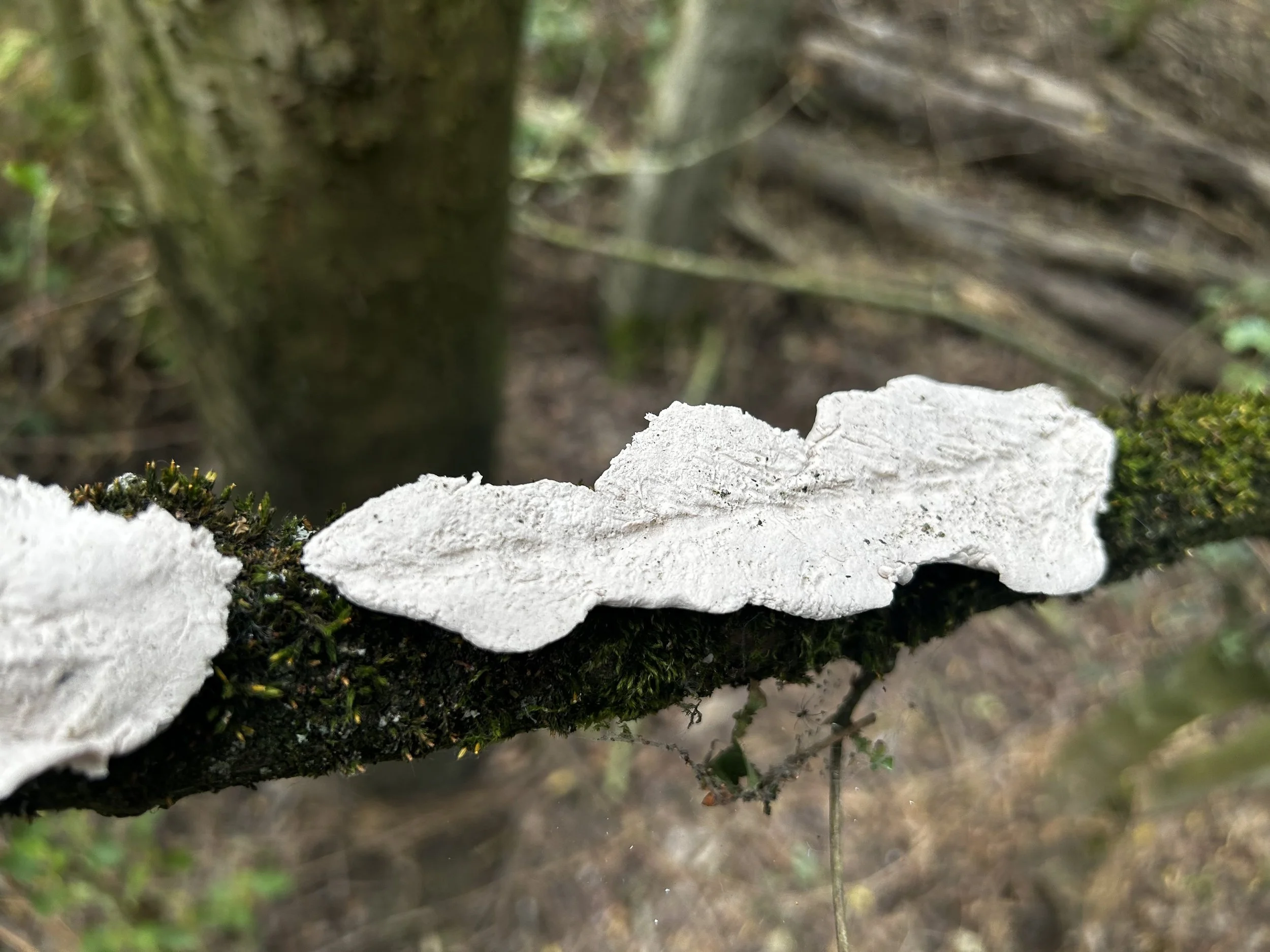
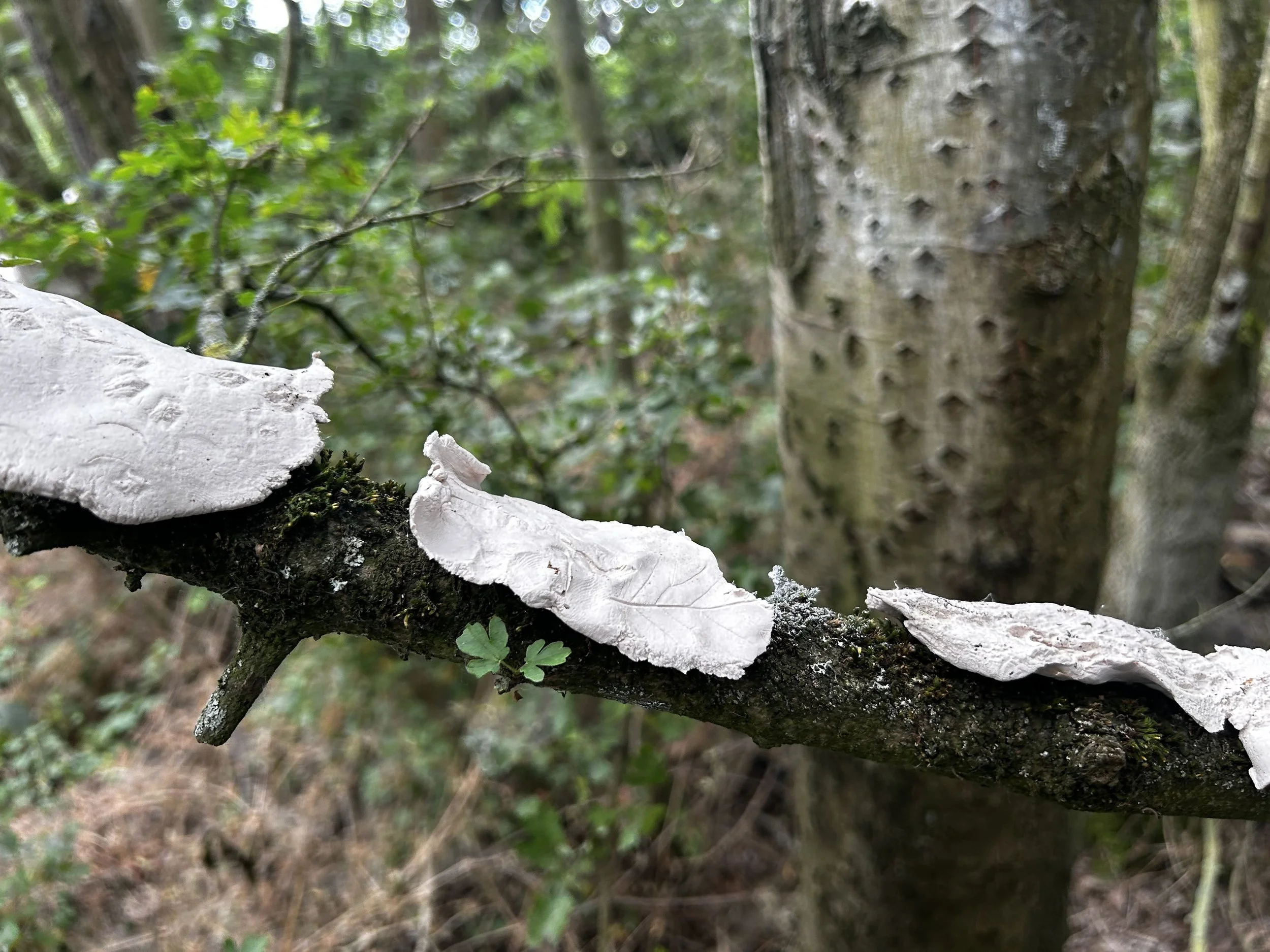
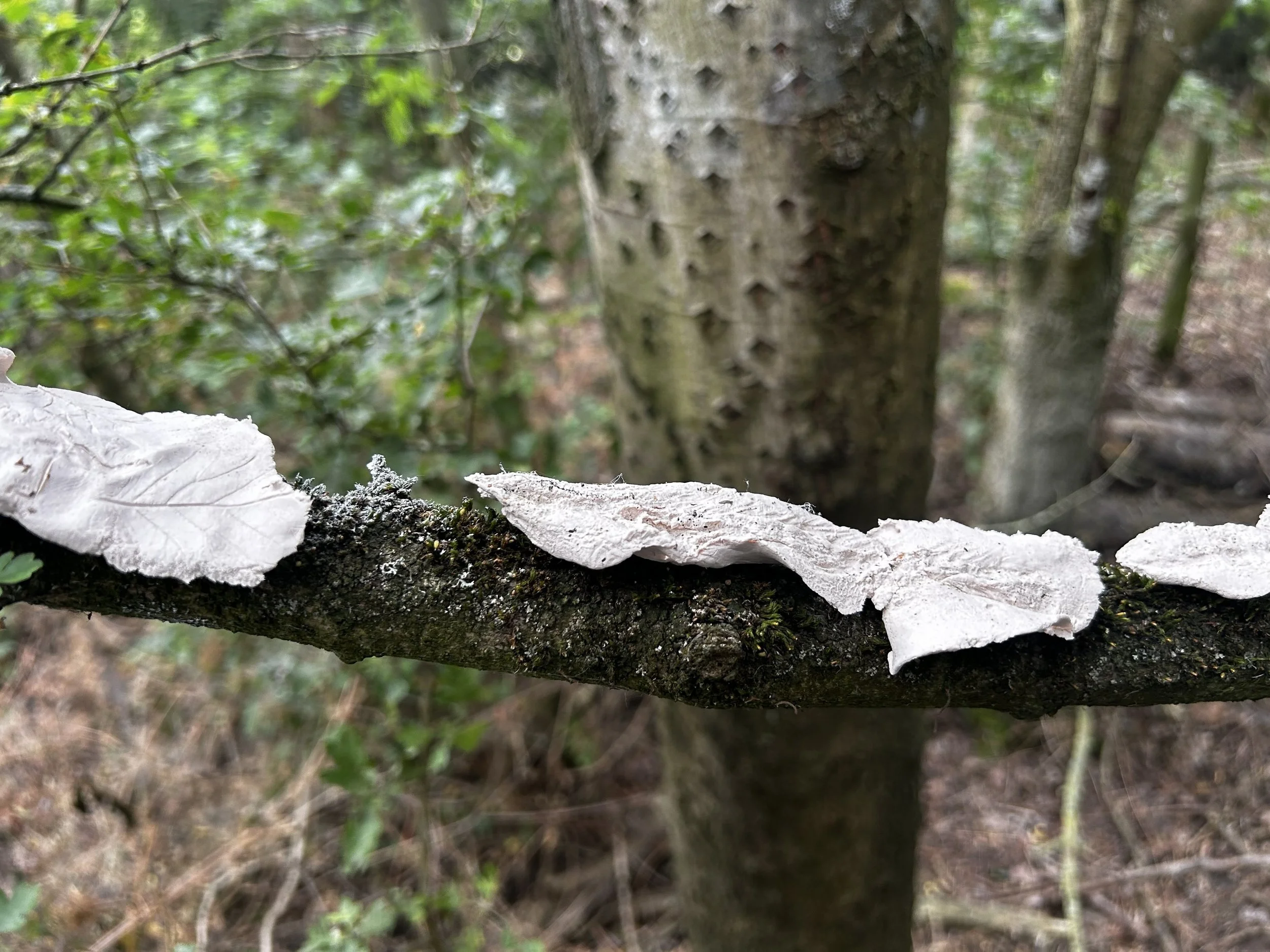
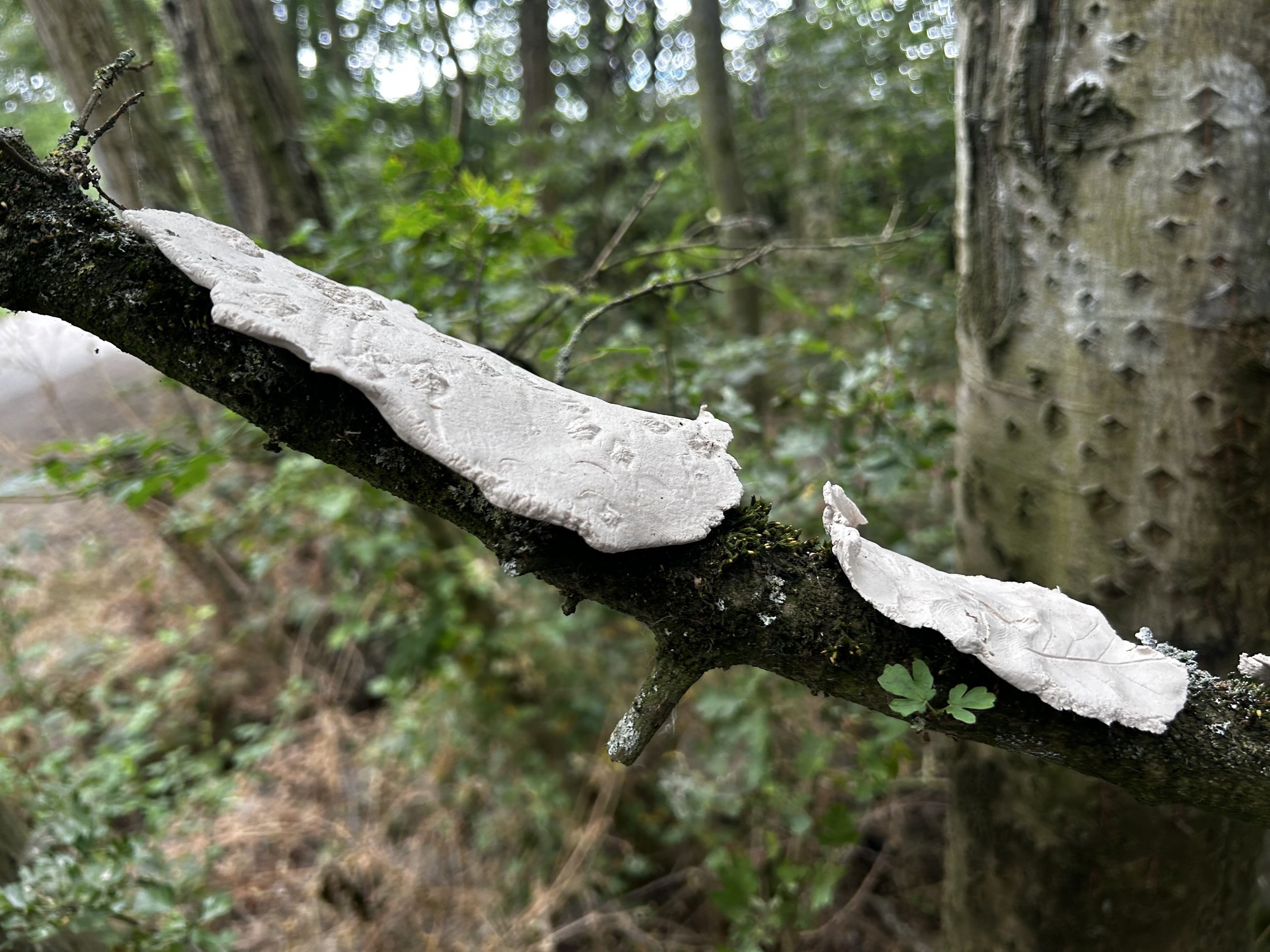
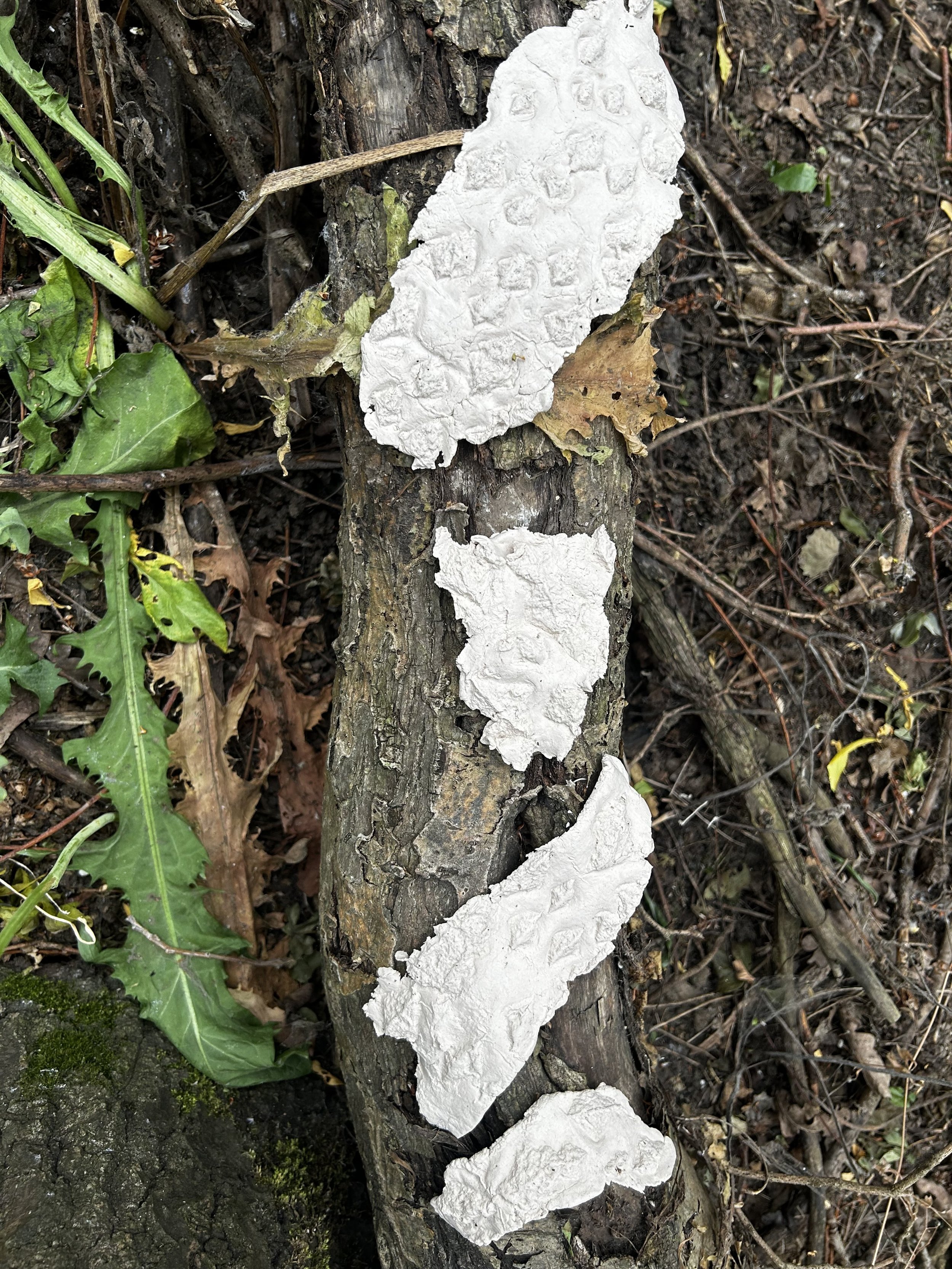
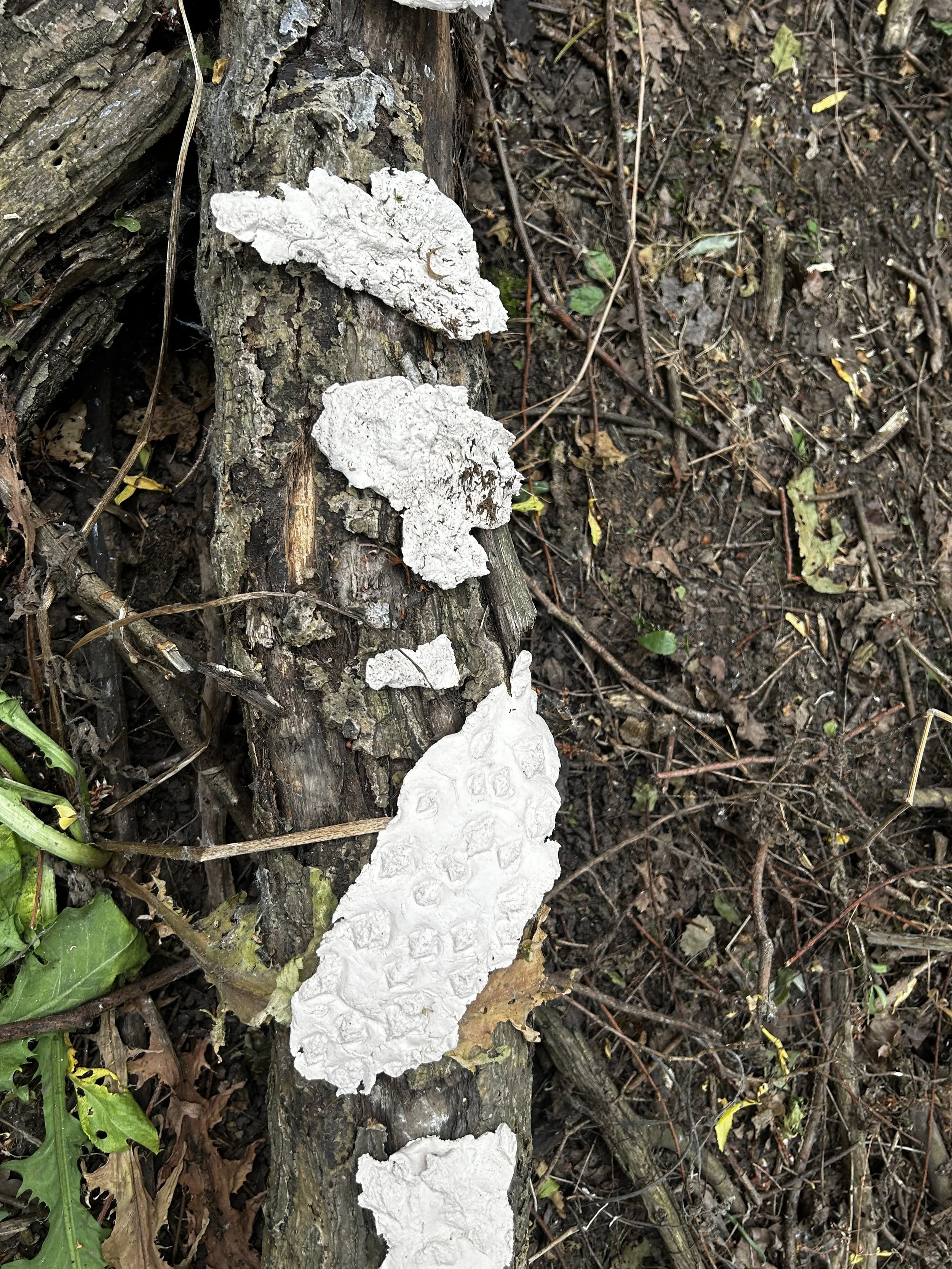
Thin Skin (2026)
I've been thinking about what it means to be thin-skinned.
It's usually spoken as a criticism, as though sensitivity is a flaw to be corrected. But what if thin skin simply means feeling more? Carrying the weight of noise, touch, emotion, expectation, and change more intensely than others might notice.
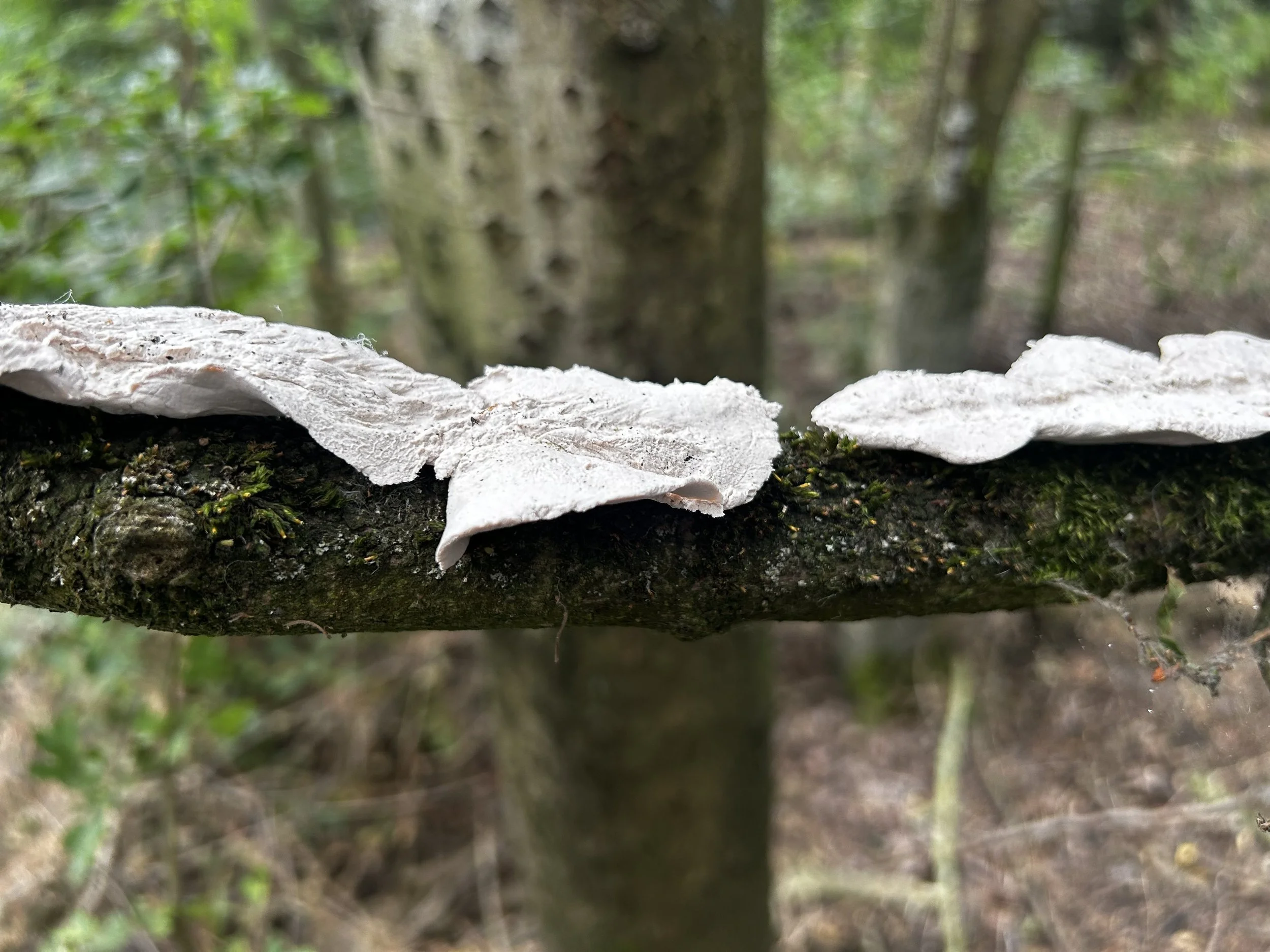
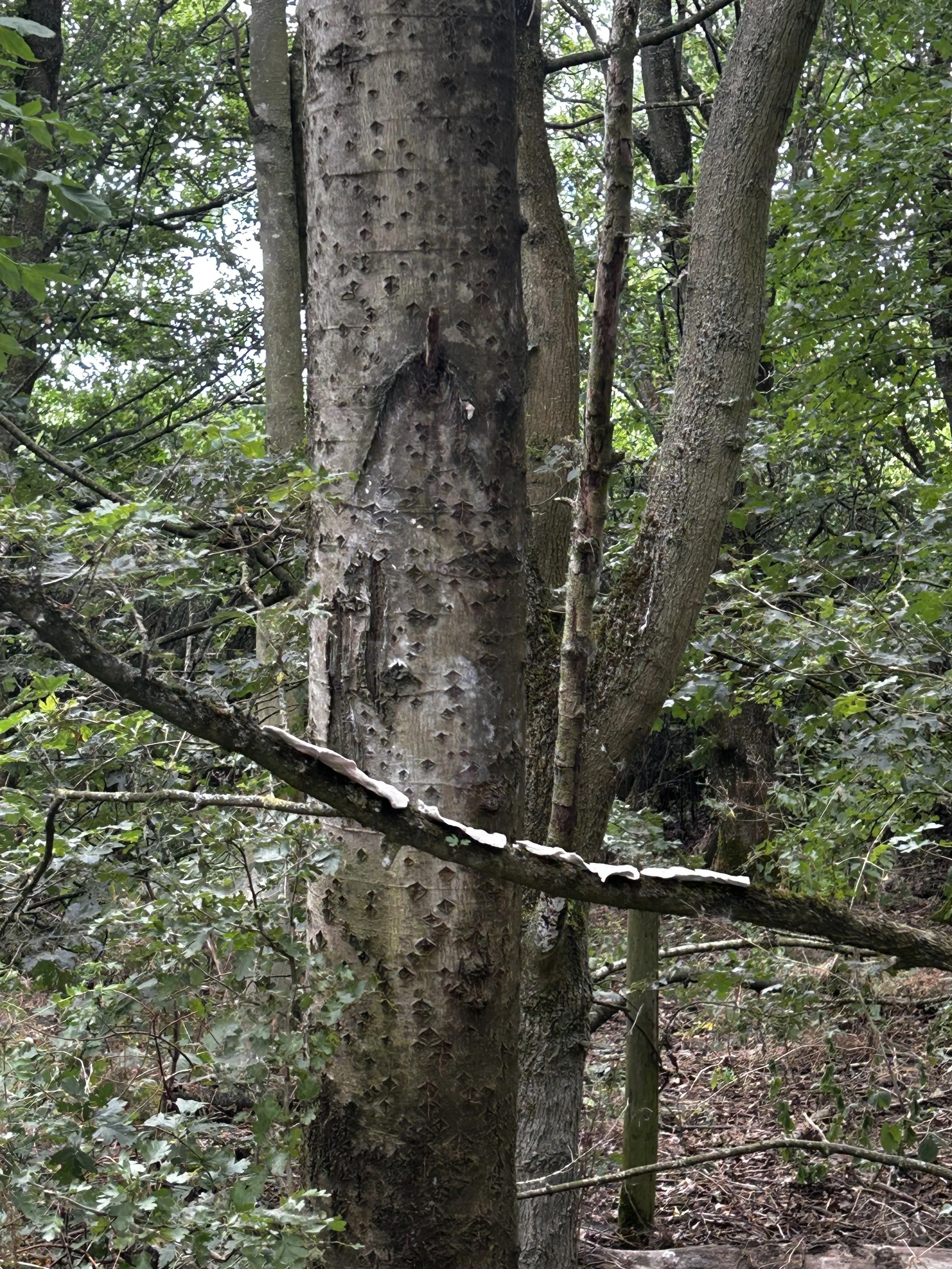
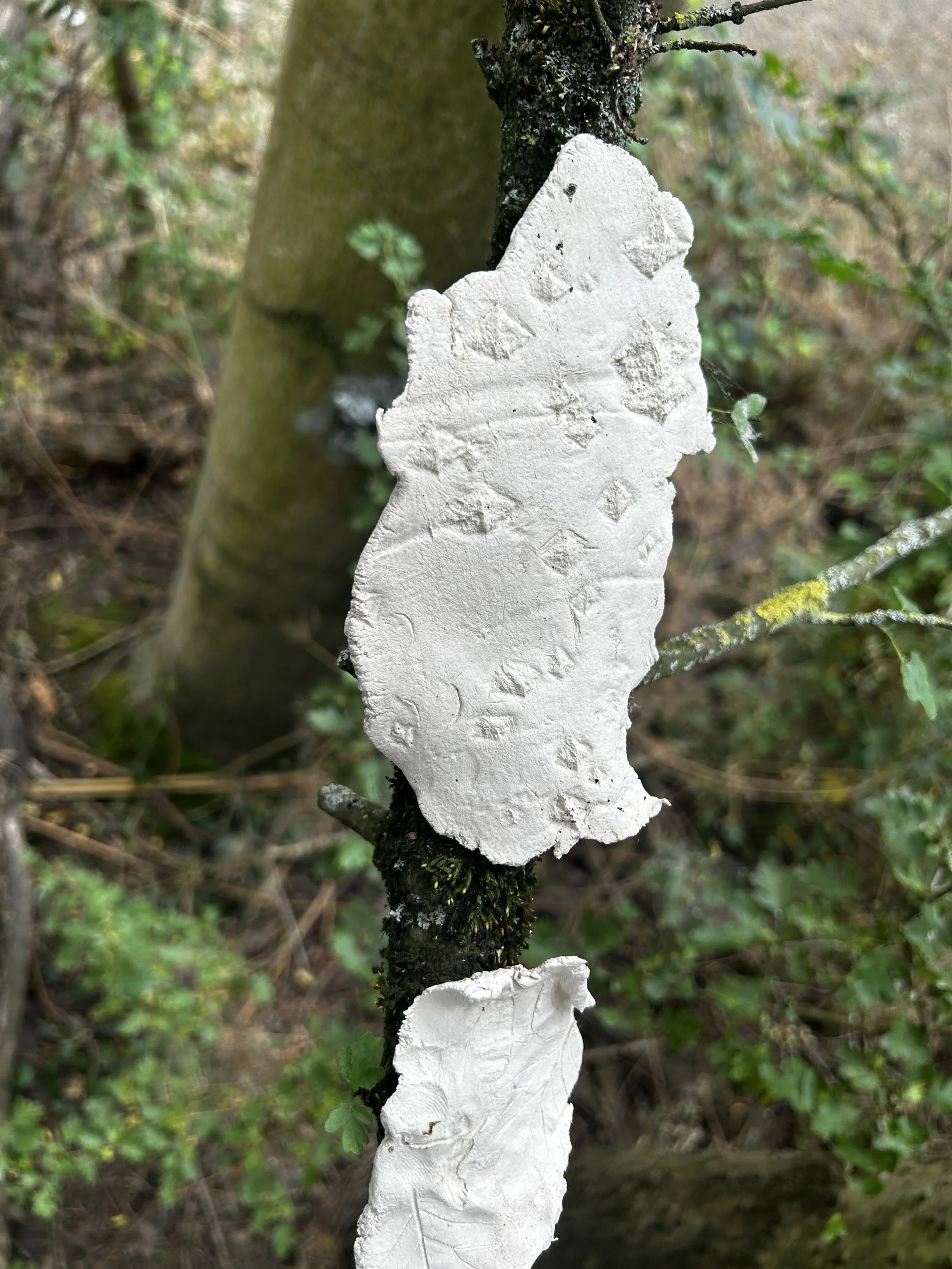
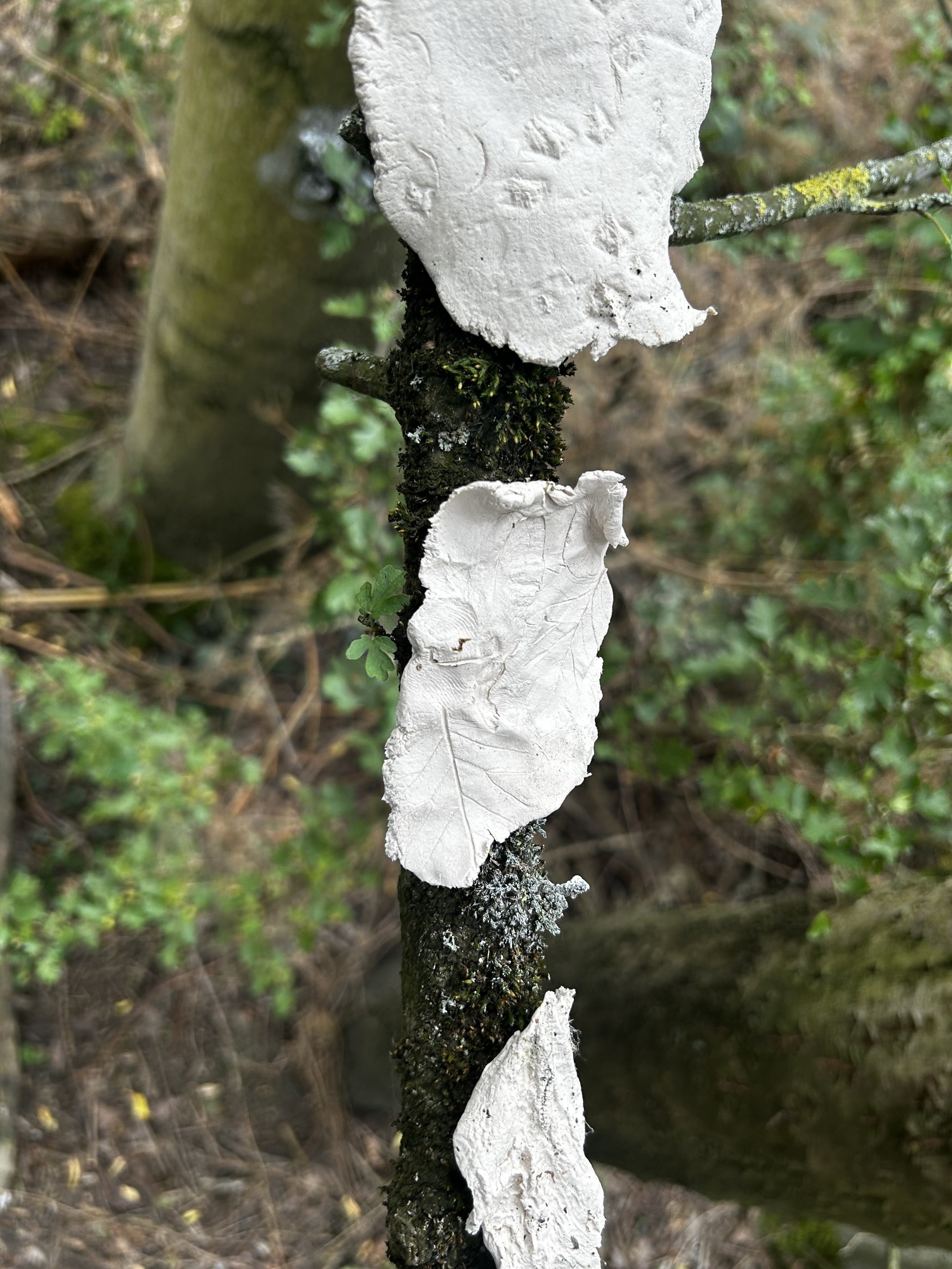
In my work, I've been using porcelain clay to create the skins of bark and moss. Porcelain feels like the right material because it remembers every touch. It records pressure, fingerprints, cracks, and traces of handling. It demands care. Like skin, it is marked by every encounter.
Working with porcelain has become a way of thinking through fatigue, illness, sensory overload, and the experience of living in a body that doesn't filter the world in the way it is expected to. Thin skin is often framed as a problem. I wonder if it is instead a different way of being in relation.
I've also been thinking about the phrase cry baby; a label used to shame emotional expression and dismiss vulnerability. Crying is often treated as excess, when it can also be a body asking for relief, connection, or rest.
I'm becoming less interested in the idea of resilience. Resilience can become another demand: bend, recover, cope, keep going. It assumes that strength comes from enduring alone.
I'm more interested in interdependence.
Bark is never only bark. Moss is never only moss. They exist through countless relationships—with water, fungi, insects, microbes, light, decay, and the trees that hold them. Their surfaces are shaped by contact.
Perhaps skin is the same.
Rather than imagining skin as a boundary that should become thicker, I'm interested in skin that remains permeable. Skin that needs the imprint of others. Skin nourished through touch, care, and relationship. Not invulnerability, but mutual holding.
My porcelain skins aren't searching for hardness. They're asking what it means to remain open, marked, and sustained by the world around us.
(Elinor Rowlands, 2026).