Practice and Conference Activity - Summer 2026
Over the summer, I undertook a period of field-based practice and conference in Iceland, followed by two conference/festival engagements that have directly informed my thinking on care, haunting and ecological entanglement within the PhD thesis and towards new work I’m circling.
Reflections
Iceland (practice and conference)
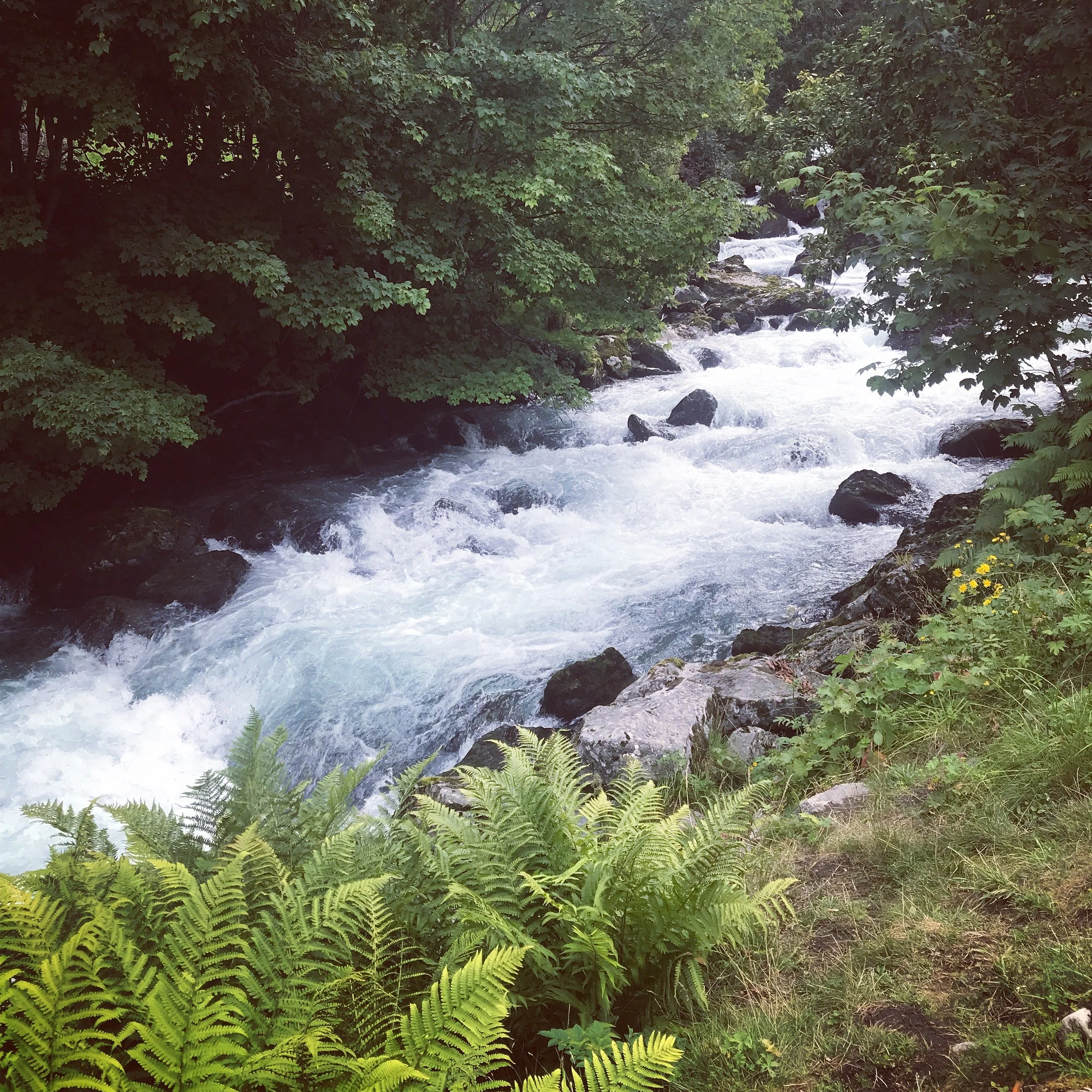
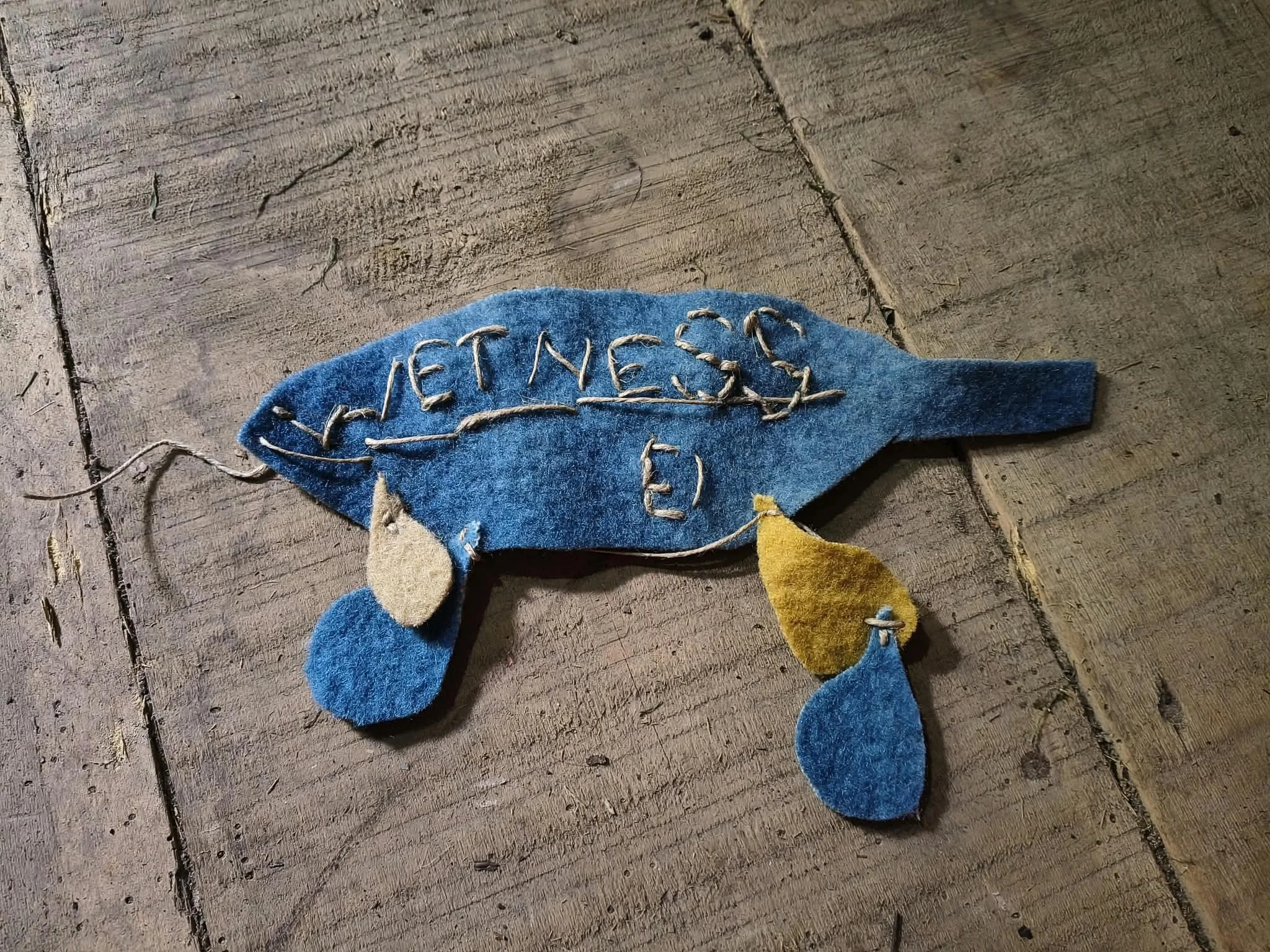
I spent time working at the water's edge and across lava fields, where moss growth is extremely slow — some patches are over fifty years old, and a single footstep can take decades to heal. This offered a concrete, non-metaphorical example of ecological "crip time": a landscape whose pace of repair resists urgency and demands attuned, careful movement. On the coast I worked with seaweed and rock to make a small, effortful spiral (a piece explicitly informed by working within a crip body, and by the tide's near-immediate erasure of the mark), and later worked with washed-up thongweed, wrapping bark in its strands. These pieces sit within the wider ongoing practice of wading/entanglement with landscape as method rather than illustration, and will feed into the practice chapter alongside the existing Madder work.
Loughborough - "Queer Ecology and the Supernatural" (symposium)
This symposium let me test the thesis's haunting framework against queer ecological theory directly. Key point of use: thinking the "supernatural" not as metaphor but as another available register for describing porous, non-fixed boundaries between self and site — relevant to the thesis's treatment of the porous/autistic sensorium and to the haunted-body material.
The Sondering, Lake District (death festival)
Attended as the counterpart engagement to Loughborough: where the symposium approached ecology through queerness and haunting, this festival approached it through death and decomposition - the return of the body to ground as an ecological and relational process rather than simply an endpoint.
These experiences were useful for sharpening the thesis's language around transformation and threshold, and worth drawing into the discussion of haunting as an ongoing, generative process rather than only a symptom of absence.